
What is Swiss Machining? How It Works and When to Use It
When a part is small, slender, or packed with complex features, machining it accurately can become more difficult than the dimensions on the print might suggest. Swiss machining is one way manufacturers address those challenges.
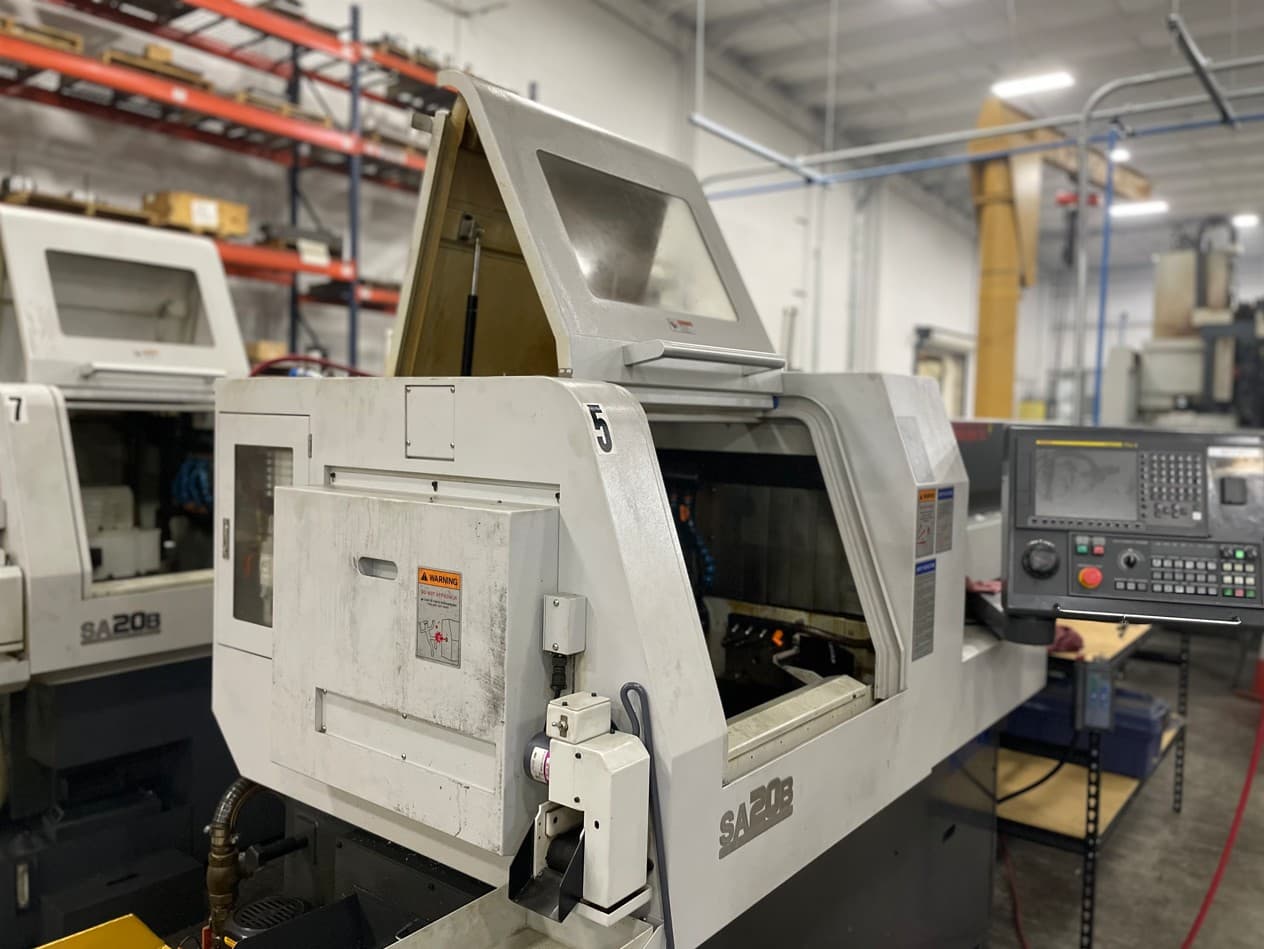
Swiss machining is a specialized CNC machining process that supports bar stock close to the cutting tool while the material moves through the machine. This configuration can provide greater stability when machining small and slender components while allowing multiple operations to be performed within the same machining cycle.
These qualities do not mean every small turned part belongs on a Swiss machine. Understanding how Swiss machining works, where it provides an advantage and where another CNC machining process may make more sense can help engineers and sourcing teams make better decisions about their parts.
What Is Swiss Machining?
Swiss machining, also called Swiss CNC machining, Swiss turning, or Swiss-type machining, is a form of CNC turning designed around a sliding headstock and, in traditional Swiss machining configurations, a guide bushing.
Like other turning processes, Swiss machining typically starts with bar stock. The material rotates while cutting tools remove material to create the required geometry. The most notable difference is how the material is supported and moved.
On a Swiss-type machine, the bar stock passes through a guide bushing positioned close to the cutting area. Instead of relying primarily on support farther away at the spindle, the material is still supported near the point where the tool engages the workpiece.
Modern Swiss CNC machines can also do considerably more than basic turning. Depending on the machine and tooling configuration, they may perform operations such as:
- Turning
- Facing
- Drilling
- Cross-drilling
- Milling
- Grooving
- Threading
- Slotting
Why Is It Named Swiss Machining?
The origin of the term “Swiss machining” unsurprisingly comes from Switzerland, where the country’s watchmaking industry played an early role for the machining process. Swiss watchmakers earned a reputation for creating special machines designed to produce small, extremely precise components needed for their high-end watches.
While Swiss machining expanded its focus to more than watch components, the name stuck. These other small-scale parts created a machining challenge that still exists today: how do you accurately machine a long or small-diameter component without allowing the material to move away from the cutting tool?
Modern CNC controls, live tooling, multiple axes, bar feeders and secondary spindles have expanded the capabilities of Swiss-type machines far beyond watch components. Today, the process is used across a wide range of industries for precision turned parts.
How Does Swiss Machining Work?
The easiest way to understand Swiss machining is to follow the material through the machine. Several elements work together to differentiate the process from conventional CNC turning.
1. Bar Stock Is Fed Through the Machine
Swiss machining commonly begins with round bar stock. That bar is held by the machine's main spindle and can be supplied automatically using a bar feeder. During production, material advances through the machine as individual components are completed.
This process makes Swiss equipment well suited to repeat production. The machine can continue producing parts from a length of bar rather than needing operators to manually load individual pieces, allowing for different levels of automation depending on the equipment, tooling, and processes being used.
2. A Guide Bushing Supports the Material Near the Cutting Tool
The guide bushing plays a critical role in supporting bar stock throughout the Swiss machining process. Materials can move or vibrate, also referred to as chatter, when cutting tools apply force to them. These movements make the material more difficult to control and negatively affect dimensional accuracy and surface finish.
A Swiss machine addresses this problem by feeding the stock through a guide bushing positioned close to the cutting area. That bushing creates a support point adjacent to the cutting tool, leaving less unsupported material exposed to cutting forces.
3. The Sliding Headstock Moves the Workpiece
Swiss machining also differs from conventional turning in how the workpiece moves. On a conventional CNC lathe, the headstock is generally stationary while the cutting tools move along the workpiece to create the required geometry. A Swiss-type machine uses a sliding headstock that moves the bar stock longitudinally through the guide bushing.
The cutting tools still move as required by the machining program, but movement of the workpiece itself becomes an important part of how the machine creates the geometry. This approach allows the machine to keep the cutting area close to the point where the material is supported.
4. Multiple Tools Can Perform Different Operations
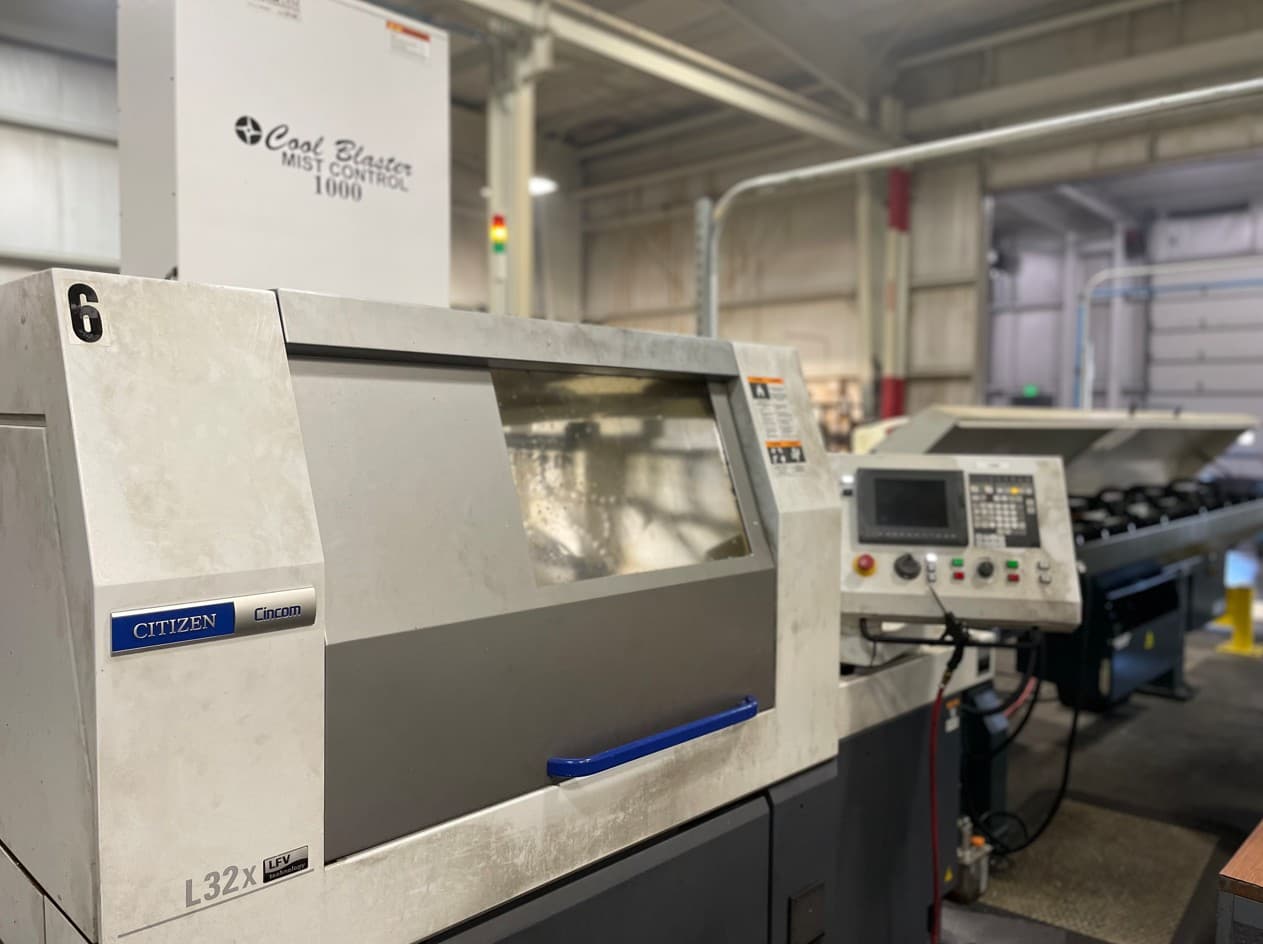
Modern Swiss CNC machines often include several tool positions and live tooling. By having a range of operations within the same machine, a component may be able to have several of those features produced in the same machining cycle.
For example, a small component could require:
- Multiple outside diameters
- An internal hole
- External threads
- A cross-drilled hole
- A milled flat
- A retaining-ring groove
Producing those features on conventional equipment could require several setups, and that’s if a shop has the available machinery and processes to accommodate them. An appropriately configured Swiss machine may be able to complete more of them before the part leaves the machine.
5. Sub-Spindles Can Machine the Opposite End of the Part
Many modern Swiss machines also use secondary spindles, commonly called sub-spindles.
Once machining on the main side of the part is complete, the sub-spindle can grab the part before it is cut free from the remaining stock and transfer it so more features can be machined on its opposite end.
This capability, sometimes called back-working, can reduce the need for a separate machining setup after the part comes off the main spindle. However, parts may still require deburring, heat treatment, inspection, or other secondary processes depending on the application.
Swiss Machining vs. Conventional CNC Turning
Swiss machining is a type of CNC turning, but the two processes handle the workpiece differently. Understanding those differences helps explain why one process may be better suited to a particular component.
| Consideration | Swiss Machining | Conventional CNC Turning |
| Material support | Guide bushing can support stock close to the cutting zone | Workpiece is typically held at the chuck or collet, with additional support methods available |
| Headstock | Sliding headstock moves material longitudinally | Headstock is generally stationary |
| Typical strengths | Small, slender and feature-rich components | Broad range of turned components, including larger and more rigid geometries |
| Multi-operation capacity | Often configured with extensive live tooling and secondary spindle capabilities | Capabilities vary significantly by machine |
| Production style | Commonly bar-fed and highly automated | Can range from individual loading to automated bar-fed production |
Neither process is inherently better, so the goal is to decide which manufacturing process is better suited for your component.
What Types of Parts Are Good Candidates for Swiss Machining?
Part size alone does not determine whether Swiss machining is a suitable machining method. A machinist typically considers several characteristics together, including geometry, length, diameter, tolerances, material, features, and production quantity.
Several types of components commonly benefit from the Swiss machining process.
- Small-diameter components: Supports the material close to the cutting area to provide stability needed to machine detailed features on components with limited cross-sectional area.
- Long or slender components: Keeps material supported close to the tool, ideal for components such as shafts, pins, and more.
- Components with multiple features: Combines several operations into an efficient, single-machine process ideal for containing several diameters, threads, grooves, flats and cross holes.
- Parts requiring repeatable production: Bar feeding, CNC control, multiple tool stations and automated part transfer can support efficient production once a stable process has been developed.
What Materials Can Be Swiss Machined?
A wide range of metals and engineering plastics can be machined using Swiss equipment when the material, geometry and application are appropriate.
Common materials include:
- Aluminum
- Brass
- Bronze
- Copper
- Carbon steels
- Alloy steels
- Stainless steels
- Titanium
- Engineering plastics
The more important consideration is not simply whether a particular material can physically be cut. Material properties influence how the machining process must be developed. Two components with identical geometry but different materials may require very different tooling and machining strategies.
A manufacturer may need to consider:
- Machinability
- Chip formation
- Cutting temperature
- Tool wear
- Material hardness
- Surface-finish requirements
- Dimensional stability
- Bar-stock availability and condition
How Do You Know if Swiss Machining Is Right for Your Part?
Deciding whether Swiss machining makes sense requires looking at the complete component and production requirements.
Several questions can help guide the discussion.
Start with Part Geometry
Consider the overall shape of the component. The more manufacturing challenges that can be addressed within the Swiss machining process, the stronger the case may become for using it.
Questions may include:
- Is the component relatively small in diameter?
- Is it long compared with its diameter?
- Does the part have several turned features?
- Are milled or cross-drilled features also required?
- Can the component be efficiently produced from bar stock?
Review Tolerances
Identifying which tolerances control the function of the part helps a machining partner develop the right process. A tight tolerance alone does not automatically mean Swiss machining is required, but it can be a strong sign that it’s an appropriate process.
Important considerations may include:
- Critical diameters
- Concentricity
- Feature location
- Hole relationships
- Surface finishes
- Tolerance stacks
Consider Production Quantity
Swiss equipment is commonly associated with production machining because of its automation and ability to process bar stock continuously. While there is no universal quantity at which Swiss machining suddenly becomes the correct choice, it can be an ideal choice for relatively complex components that require a certain level of production.
Consider the Material
CNC materials affects almost every part of the machining process, making it a big part of the process-selection conversation from the beginning. A machinist may consider:
- How readily the material cuts
- How chips behave
- How quickly tools wear
- How the material responds to heat
- Whether bar stock is readily available in the required condition
Look at the Entire Manufacturing Process
A machining decision should not stop at the final cut. You should ask whether a machining method provides the right combination of manufacturability, quality, throughput, and cost for this particular component.
If Swiss machining can combine several machining operations but the component still requires substantial downstream processing, those requirements need to be considered when planning cost and lead time. The complete production process may include:
- Machining
- Deburring
- Cleaning
- Grinding
- Heat treatment
- Plating or coating
- Inspection
- Packaging
- Assembly
Choose the Right Machining Process for Your Part
Swiss machining gives manufacturers a valuable option for solving demanding small-part production challenges. However, technology alone does not determine whether a project will be successful.
The machining partner still needs to understand how the material will behave, which dimensions are critical, how tooling should be applied, which operations can be combined, and what happens to the component after machining is complete.
Coleys' Swiss machining experience extends back more than 50 years, with its capabilities further expanded through the acquisition of Automatic Parts Inc. in 2009. That experience supports a practical approach to process selection and the ability to scale machining to grow along with your business.
If you're evaluating a part and aren't sure whether Swiss machining, conventional CNC turning or another process is the right fit, contact the Coleys team to review the application and help determine an appropriate path forward.
Request a Quote
About Coleys CNC Machining
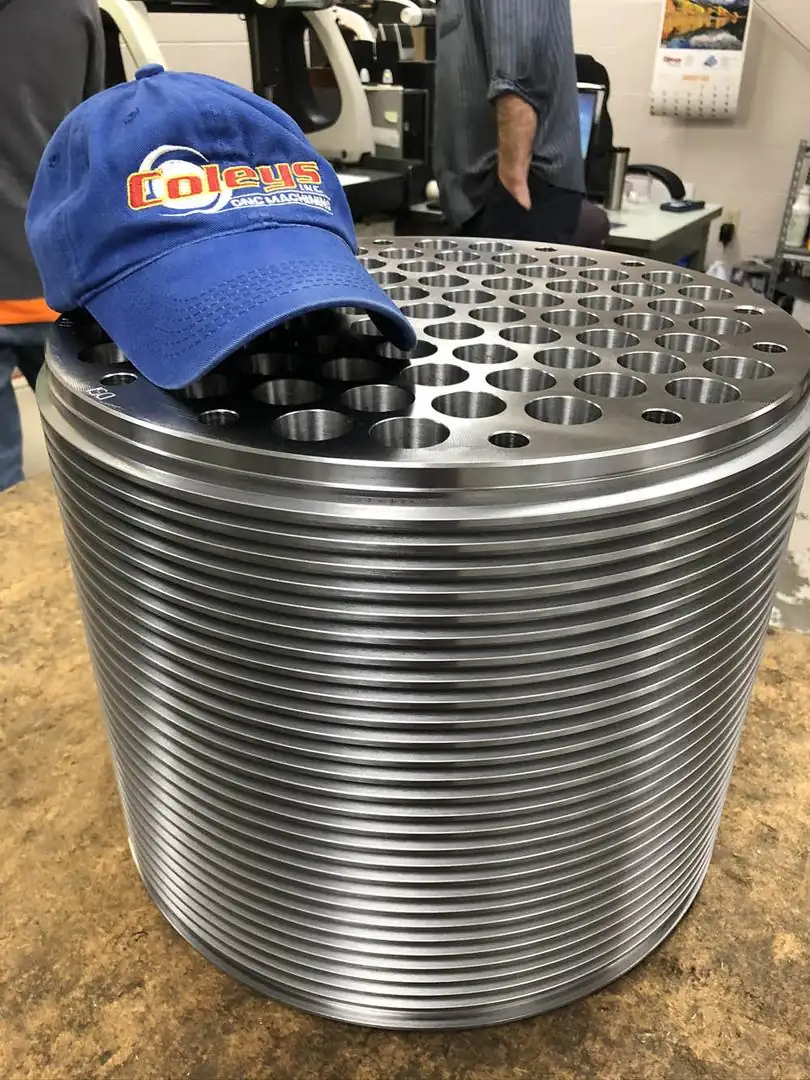
For over 50 years, Coleys Inc. has provided high-demand, low-tolerance industries with superior quality machining. Our services range from simple drilling of production-ready parts to the complex fabrication of intricate designs.
